
Warehouse pallet racking inspection
Compare racking inspection quotes without ringing around.
Tell us about your racking once. Rackly finds suitable independent inspectors and lets you compare what they come back with, instead of hunting them down and phoning each one separately.
- Independent inspectors, not racking sellers
- One brief, up to three inspectors
- Nothing shared without your consent
- No obligation to proceed
 Independent inspectors, not racking sellers
How it works
One brief. Independent inspectors. You choose.
- Step 1
Describe the warehouse and racking
Location, an approximate number of pallet positions, racking type if known and any damage you have noticed are captured once, in a brief an inspector can actually price from.
- Step 2
Match to reviewed independent inspectors
Providers are matched on their declared experience and location, not on a credential — there isn’t one to check. A claimed competence basis is reviewed before a profile can receive opportunities.
- Step 3
Compare responses and choose
Inspectors respond independently with their own price, timing and notes. You choose whether to proceed, and the inspection itself is the inspector’s professional judgement, not something this site assesses.
- Step 4
Deal with the inspector directly
Once you select someone, the job is between you and them. Rackly is a matching service: it does not carry out the inspection, set the fee, supervise the work or issue the report.



Why bother
The slow part isn’t the inspection. It’s finding someone to do it.
Sourcing a racking inspection normally means finding candidates yourself, phoning them one at a time, describing the same warehouse over and over, and waiting to hear back from each separately. The brief is the same every time — so it is worth writing once.
- Describe it onceLocation, size band, racking type, damage noticed and timing — captured in one form.
- Up to three inspectorsEach responds separately with their own price, timing and notes. Nobody sees another’s response.
- Compare and decideSide by side, on a private link. No ranking, no “recommended” badge, no obligation.
- Consent before anything movesNothing reaches a provider until you tick the box — enforced in the system, not promised on a page.


Where the 12-month figure comes from
No single law names racking. Two regulators point at the same standard.
There is no Australian Act or Regulation that names pallet racking, sets an inspection interval and attaches a penalty to it. What exists is the general work health and safety duty that plant and structures must be without risks to health and safety — a duty written for everything in a workplace, which applies to racking the same way it applies to anything else.
The 12-month figure and the "competent person" wording come from the Australian Standard, not the Act. WorkSafe Victoria and SafeWork NSW each point businesses to AS 4084 for the operational detail, independently of one another.
Victoria and New South Wales are the two we checked. We have not confirmed the same guidance for Queensland, South Australia, Western Australia, Tasmania, the ACT or the Northern Territory, and this page does not assume it carries over.

AS 4084.2:2023 is a document Standards Australia sells. We cite it by number, part and title. We do not reproduce what it says, and holding a copy is not something this site can do for you.
Regulator guidance:WorkSafe Victoria — Pallet racking operation and maintenanceSafeWork NSW — Pallet racking guide
What to mention in your brief
Things worth telling an inspector before they quote.
None of this is a self-assessment, and noticing none of it does not mean there is nothing to find. It is the kind of detail that helps an inspector scope and price the job before they arrive. Whether the racking is sound as currently loaded is a structural judgement made by the person doing the inspection.
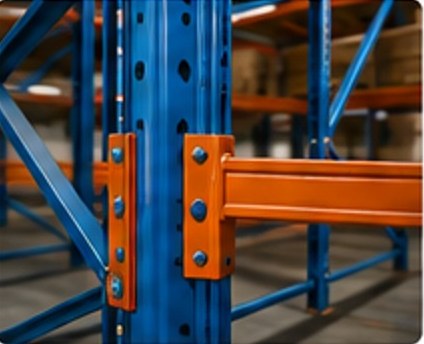
- A bent, dented or twisted upright
- A beam that has come out of its connector
- Missing or dislodged safety clips
- Visible forklift impact at floor level
- Load signage that is missing, damaged or no longer legible
- Anything that has changed since the racking was installed

Request responses
Request inspection quotes
Your information is used to assess and route this service request. Nothing is sent to providers unless you consent to sharing it.
Rackly is new and still building its inspector list, so a request may take longer to match than it will once more inspectors have joined.
- No charge to ask, no obligation to proceed
- Inspectors set their own fees
- You deal with the inspector directly once you choose
 No charge to ask, no obligation to proceed
 You deal with the inspector directly once you choose
Questions
The things people actually ask.
No. Rackly is a matching service. It takes your brief, routes it to independent inspectors, and lets you compare what they send back. The inspection, the fee, the report and the professional judgement are all theirs.
Founding inspectors
Do you inspect pallet racking?
There is no licence or certification that governs racking inspection, so we do not ask you to hold one. We ask providers to declare their racking-inspection experience, professional indemnity / public liability insurance and familiarity with the ASI Code of Practice, and we review that before any opportunity is routed to you.
- Keep your own pricing and business relationship.
- Set the work, areas and lead types you actually want.
- Pause opportunities if you are at capacity.